top of page


Synopsis
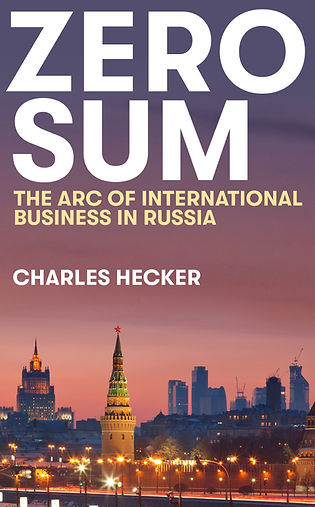
When the hammer and sickle flag came down in late 1991, a feverish new market called Russia opened for business. From banking to breweries, entire sectors emerged out of nowhere, in a country that had never had a functioning economy. For the next three turbulent decades, a wild, proto-capitalist free-for-all transformed Russian society.
Then, in 2022, Putin launched the full-scale invasion of Ukraine. The market started to collapse; Western firms fled Moscow’s skyscrapers. No country this large had ever transformed itself as dizzyingly as did Russia. Now, just as dramatically, it was over. The intervening decades saw phenomenal successes and crushing failures; the creation and destruction of enormous fortunes. How did it all happen?
Zero Sum brings to life the complex, vivid colour of one of the greatest experiments in the history of global commerce. What have businesses learnt—or failed to learn—from this adventure, both about Russia and about the dynamics between countries and companies in the face of relentless change?
“Zero Sum” is a smart, often colorful book, enlivened by the grim smirk of someone who has intimate knowledge of how the everyday Russian economy really works. Hecker witnessed most of the three-decade saga up close, as a reporter for The Moscow Times and then as a geopolitical risk consultant advising Americans and Europeans investing in Russia. He arrived from Miami in the mid-90s, on the heels of what Harvard Business Review lauded as “a liberal-market revolution.”
Owen Matthews, author, Overreach: The Inside Story of Putin and Russia's War Against Ukraine
'This is a magnificent book. A tour de force exploration of the rollercoaster story of Western capitalists and their misadventures in post-Communist Russia chronicling the hope, the naivety, the idealism, the greed and arrogance and folly in glorious, highly-readable detail. There has been no more thorough, moving or better-researched study of the epic cycle of the opening of Russia’s economy in a blaze of ill-founded optimism in the early 90s to its closing in bitter recrimination and conflict in the wake of Putin's invasion of Ukraine.'
bottom of page